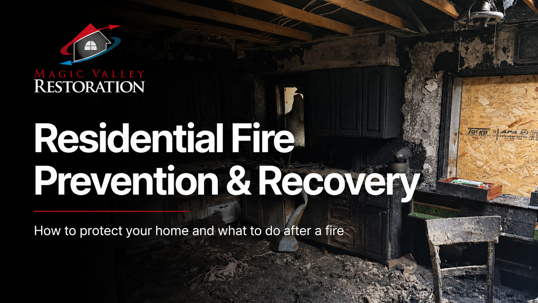
Residential Fires Are Increasing:
How to Protect Your Home and What to Do After a Fire
At Magic Valley Restoration, we have recently seen an increase in residential fire damage throughout Southern Idaho. It is a sobering reminder that a house fire can happen quickly—and the damage often extends far beyond the area where the flames began.
Fire, smoke, soot, heat, and the water used to extinguish the fire can affect nearly every part of a home. Knowing how to reduce your risk and what to do immediately afterward can help protect your family, property, and belongings.
Common Causes of Residential Fires
Cooking remains the leading cause of reported home fires and home fire injuries in the United States. Electrical issues, heating equipment, smoking materials, candles, dryers, and improperly handled batteries can also lead to devastating fires.
Many residential fires begin during normal, everyday activities. A pan is left unattended, a damaged cord overheats, or combustible material is placed too close to a heat source. Taking a few additional precautions can make a significant difference.
How to Help Prevent a Fire in Your Home
Install and maintain smoke alarms
Working smoke alarms provide critical early warning. The U.S. Fire Administration recommends installing alarms inside every bedroom, outside each sleeping area, and on every level of the home.
Test your alarms regularly, replace batteries as needed, and never disconnect an alarm because it is sounding during cooking. According to the National Fire Protection Association, working smoke alarms reduce the risk of dying in a home fire by approximately 60%.
Never leave cooking unattended
Stay in the kitchen when frying, grilling, or cooking with high heat. Keep towels, packaging, wooden utensils, and other combustible materials away from the stovetop.
Turn pot handles inward, keep children away from hot cooking areas, and keep a lid nearby that can be used to cover a small grease fire. Never pour water on a grease fire.
Inspect electrical cords and outlets
Replace appliances with damaged, loose, or cracked cords. Major appliances should be plugged directly into a wall outlet rather than connected through an extension cord, which can overheat.
Avoid overloading outlets, and contact a qualified electrician when you notice flickering lights, frequently tripped breakers, buzzing outlets, burning odors, or outlets that feel unusually warm.
Use heating equipment carefully
Keep furniture, blankets, curtains, clothing, and other combustible materials away from fireplaces and portable heaters. Turn portable heaters off before leaving the room or going to sleep.
Have fireplaces, chimneys, furnaces, and other heating systems inspected and maintained as recommended.
Be cautious with candles and batteries
Never leave burning candles unattended, and keep them away from children, pets, curtains, and decorations.
Use the correct chargers for rechargeable and lithium-ion batteries. Stop using a battery or device if it becomes swollen, damaged, unusually hot, or begins producing an unfamiliar odor.
Create and practice an escape plan
Every family should know how to exit the home quickly. Identify two possible ways out of each room, keep exits clear, and select a designated meeting place outside.
Practice the plan with everyone in the household, especially young children. Once outside, remain outside. Never return to a burning home for belongings or pets.
What to Do Immediately After a House Fire
The hours following a fire can feel overwhelming. Your first priority should always be the safety of your family.
1. Do not re-enter the home
Do not enter a fire-damaged structure until the fire department has confirmed that it is safe. Hidden structural damage, hot spots, contaminated water, damaged wiring, and toxic smoke residue may still be present.
2. Contact your insurance company
Notify your insurance carrier as soon as possible. Ask about emergency housing, personal-property coverage, deductibles, and the steps required to begin your claim.
Keep a record of claim numbers, adjuster information, conversations, receipts, and temporary living expenses.
3. Contact a professional restoration company
Fire damage does not stop when the flames are extinguished. Smoke and soot can travel through wall cavities, ductwork, insulation, and adjoining rooms. Water used during firefighting efforts can also create additional structural damage and potential mold concerns.
A professional fire restoration team can assist with:
- Emergency board-up and roof protection
- Water extraction and structural drying
- Debris removal
- Smoke and soot cleaning
- Odor treatment
- Contents evaluation and cleaning
- Structural repairs and reconstruction
Beginning the restoration process quickly may help prevent additional damage and preserve more of the home and its contents.
4. Avoid cleaning soot yourself
Household cleaners and improper techniques can permanently set soot stains or spread residue into unaffected areas. Avoid touching walls, ceilings, upholstery, or damaged belongings until they have been evaluated.
Do not turn on HVAC equipment, appliances, or utilities unless emergency personnel or another qualified professional has confirmed that doing so is safe.
5. Allow the restoration company to document the damage
A reputable restoration company will typically photograph and document affected rooms, materials, and belongings as part of the initial assessment. This documentation can help support the insurance claim, establish the scope of damage, and create a clear record before cleanup or repairs begin.
Avoid moving, cleaning, or discarding damaged items until the restoration team and insurance adjuster have completed the necessary documentation.
Helping Southern Idaho Families Recover
A residential fire changes a family’s life in a matter of minutes. At Magic Valley Restoration, we understand that fire restoration is not simply about repairing a structure. It is about helping families regain safety, comfort, and a sense of normalcy.
Our experienced team provides comprehensive fire, smoke, soot, water-damage, contents, and reconstruction services throughout the Magic Valley and Southern Idaho.
When the unexpected happens, Magic Valley Restoration is available 24/7 to help secure your property and begin the recovery process.